I spent nine years in the insurance industry, staring at accident reports and listening to claims handlers try to parse the difference between "I took my meds" and "I was off my head." Back then, medical cannabis was a rarity in the UK. Today, it’s a reality for thousands of patients. But as a former claims handler and now a features writer, I see a massive disconnect between what patients think is "legal" and what the law actually says. If you are a prescribed medical cannabis patient, you aren't exempt from the laws of physics or the Road Traffic Act.
Let’s cut through the noise. People keep asking me, "If I have a prescription, can I drive?" My answer is always the same: "Can you prove, in a court of law, that you weren't impaired?" That is the only question that matters.
The Law: Understanding Section 5A of the Road Traffic Act 1988
When the UK introduced "drug-driving" laws under Section 5A of the Road Traffic Act 1988, they essentially created a "strict liability" offence for certain substances. For cannabis, the limit for THC is set at a staggeringly low 2 micrograms per litre of blood.
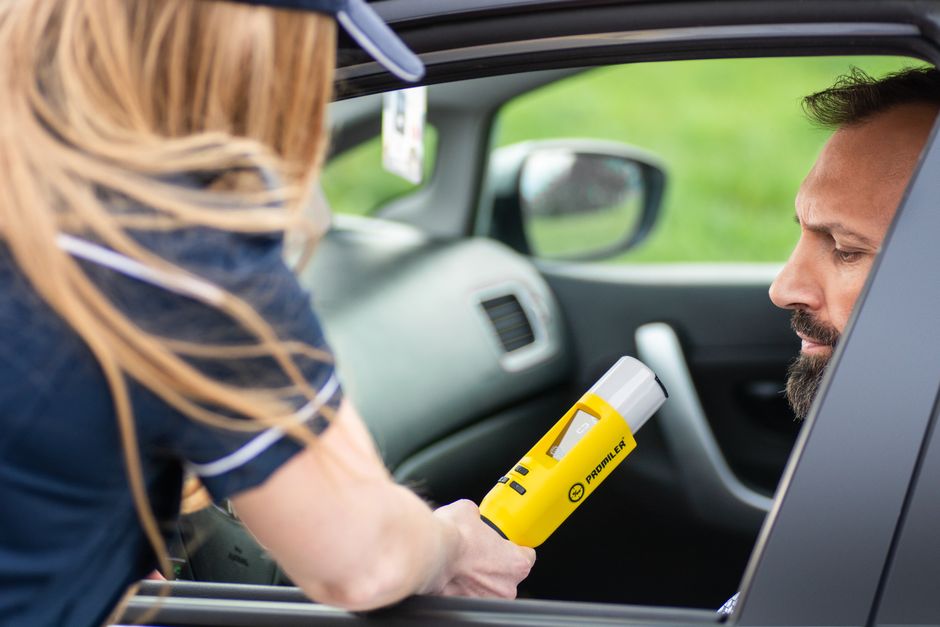
What this means at the roadside: The police don’t need to prove you were driving erratically to charge you. If they pull you over, use a roadside drug wipe, and it tests positive for THC above that 2mcg limit, you are, for all legal intents and purposes, a drug driver. The science is irrelevant to the initial arrest; the law assumes that at 2mcg, your reaction time slowed and your reduced concentration driving is a danger to the public. https://evpowered.co.uk/feature/medical-cannabis-and-uk-driving-laws-what-ev-owners-must-know/ It doesn’t matter if you have a prescription in your pocket; it matters what is in your bloodstream.
The Medical Defence: Why it is not a "Get Out of Jail Free" card
There is a specific "medical defence" for prescribed drugs. If you are caught over the limit, you can argue that you were taking the medication in accordance with medical advice. However, I’ve seen enough legal files to tell you this: the burden of proof is on you, not the police.
If you get pulled over, you have to prove two things simultaneously:
You were taking the medication as prescribed by a healthcare professional. Your driving was not impaired by that medication.If the police report mentions that you were swerving, failing to stay in lane, or that your speech was slurred, the medical defence vanishes. The Crown Prosecution Service (CPS) will argue that even if the medication was "legal," you were still impaired driving definition UK-wise. A prescription is not a licence to drive whilst under the influence; it is a permission to possess and use a controlled substance for a condition.

Impairment vs. Presence: How the law catches you
Many patients confuse the "presence" of THC with "impairment." They are not the same thing, but the police treat them as if they are. THC is fat-soluble; it stays in your system long after the psychoactive effects have worn off. You might feel perfectly fine to drive, but if a lab test detects THC levels above the limit, you are fighting a uphill battle.
During my time in claims, I dealt with a case where a driver was involved in a minor collision. He was a medical cannabis patient. He hadn’t vaped for six hours. He was sober. But the blood test came back at 3mcg. He lost his licence. Why? Because the court doesn't look at "how you felt." They look at the numerical value in your blood and the fact that you were involved in a collision, which is prima facie evidence of reduced concentration driving.
My "Checklist for the Roadside"
I am a stickler for checklists. If you are a medical cannabis patient, you need to be prepared for the worst-case scenario. If you are pulled over, do not treat the officer as a doctor. Treat them as a representative of the state who is building a file against you.
- The Prescription Copy: Always carry a digital or paper copy of your prescription from your clinic. Original Packaging: Never carry your medication in anything other than the original pharmacy packaging with your name on it. If it’s in a loose baggie, you might as well be an illegal user. The Doctor’s Letter: A letter from your prescribing consultant stating that you are stable on the medication and that it does not impair your driving is your best friend. The "Fit to Drive" Assessment: Keep a personal log of when you take your medication and how long you wait before operating a vehicle.
The Reality of Impairment
When we talk about the impaired driving definition UK courts use, it’s not just about "feeling high." It is about cognitive load. Driving is a complex task. It requires rapid information processing, spatial awareness, and the ability to predict the behaviour of other road users.
Even if you feel you have built up a tolerance to your medication, your brain is still processing information differently. I see people make the mistake of thinking, "I'm a better driver on cannabis because it calms me down." That is a dangerous subjective opinion. The law cares about objective standards—specifically, whether your reaction time slowed compared to a sober driver.
Comparison Table: Legal Status vs. Driving Safety
Aspect Legal Status Road Safety Reality THC in Blood Prescription provides a potential defence. High levels correlate to slower reaction times. Police Assessment Subjective (field impairment tests). Can you walk a straight line under pressure? Medical Defence Valid if you aren't impaired. Extremely difficult to prove in a courtroom. Insurance Policy may be void if convicted. "Impaired" is a standard exclusion clause.What to do if you are stopped
If you are stopped and the officer initiates a drug test, be honest immediately. Do not hide your prescription. Tell them: "I am a medical cannabis patient with a valid prescription, and I have all my documentation in the glovebox."
If you try to "bluff" your way through, you look like a standard drug-driver. If you are transparent, you have a better chance of the officer considering whether you are actually impaired. However, be warned: if you fail the roadside swab, you are almost certainly going to be arrested for blood analysis. That is standard procedure. Don't fight the arrest; it only adds "resisting" or "disorderly" charges to the file, which hurts your credibility with the court.
Final Thoughts: Don't take the risk
I hate vague advice like "just don't drive." It’s unhelpful for people who need their medication to function. Instead, I’ll give you the advice I give my friends: treat your car like a heavy machine. Because it is.
If you feel any change in your perception, if your reaction time slowed even by a fraction of a second, or if you feel any reduced concentration driving creeping in, do not turn the key. The legal system in the UK is binary—it’s either "fit" or "unfit." There is no "I'm just a little bit buzzed" category. If you are a patient, you are responsible for your own safety and the safety of everyone else on the tarmac. Keep your paperwork, know your limits, and for heaven's sake, if you feel even slightly off, take the bus. Your licence is worth more than a drive.